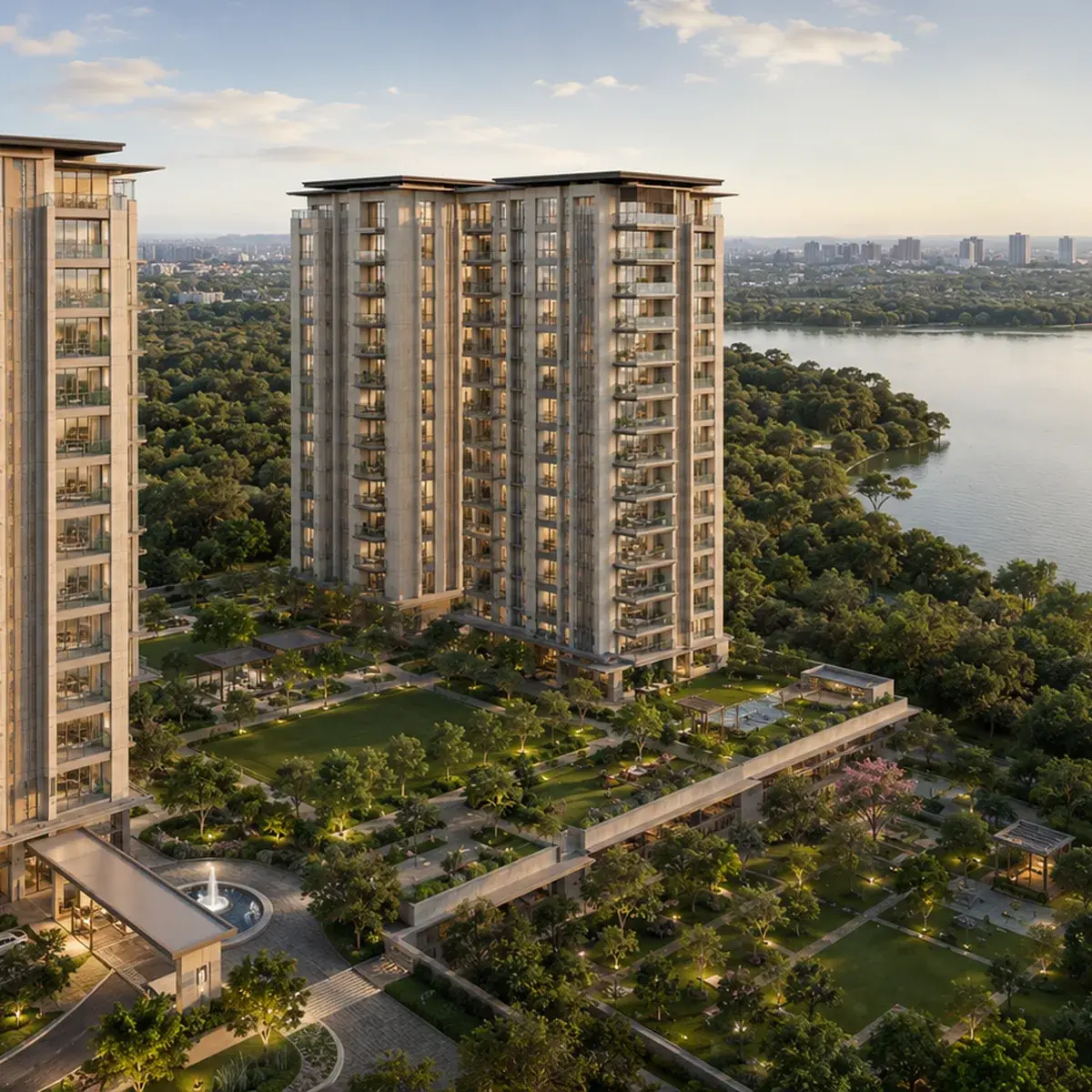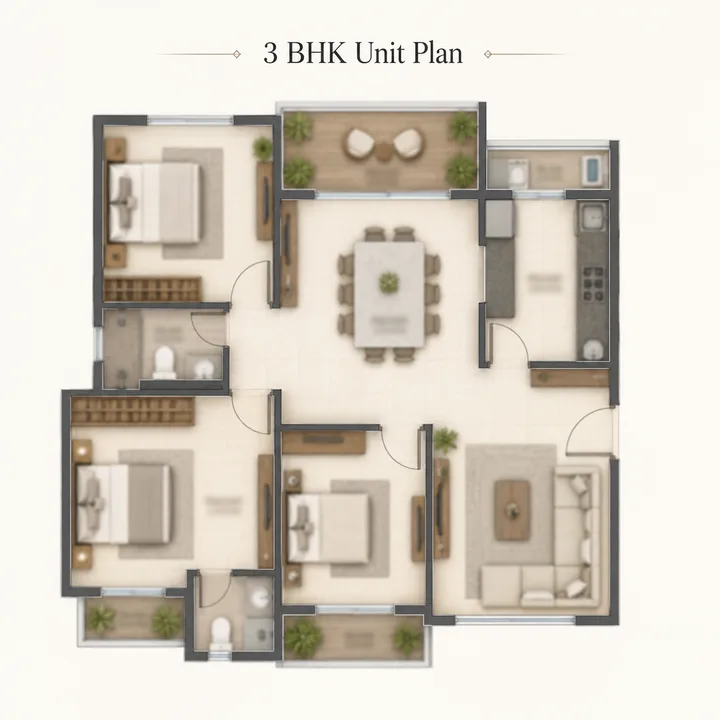
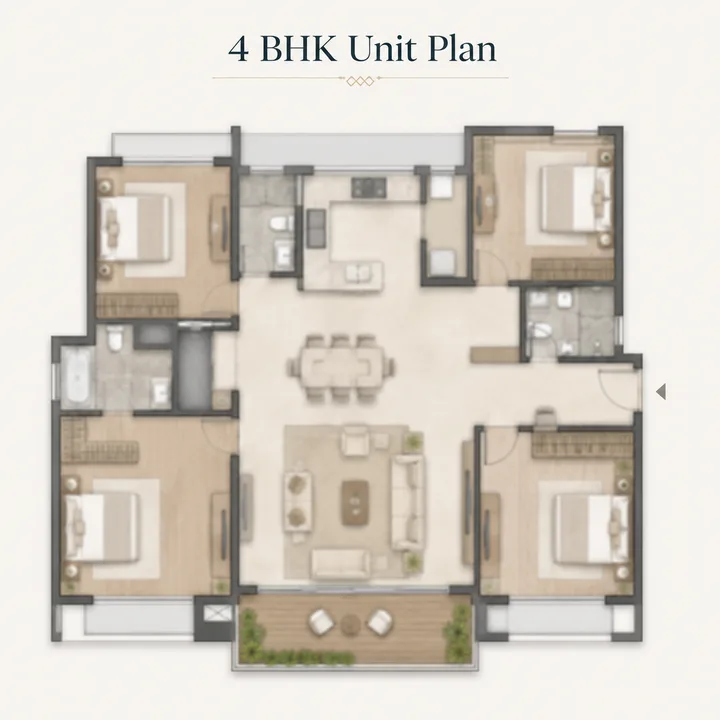
How the Floor Plate Shapes the Homes
How the Low-Density Floor Plate Shapes the Layouts
A boutique-density community is structurally different from a high-density tower complex, and the practical consequences for the individual apartments are real.
- More perimeter per unit. Fewer units on a floor leaves more of each apartment on the building's external edge, so more rooms get external windows and cross-ventilation. High-density plates push interior units into the core, where bedrooms borrow light from shafts.
- Larger, regular layouts. Fewer units per plate means each apartment can be sized and shaped without the compromises of fitting many homes onto one slab - which is what allows the generous 3 and 4 BHK formats.
- Quieter shared cores. Fewer households share each floor's lift lobby and corridor, so the common spaces stay quieter and less worn.
- Better outlook. With the buildings well-spaced and oriented to the lake-adjacent open space, more apartments look out onto greenery and water rather than a neighbouring wall.
Reading the floor plans before you buy
When the detailed plans are released at launch, confirm the carpet-to-super-built-up ratio (the RERA carpet area is the legally meaningful number), the room dimensions rather than just the count, the orientation and ventilation of your specific unit, and the balcony, deck and utility provision - relevant given the lake-adjacent setting. The price page works through the full cost stack on each configuration.